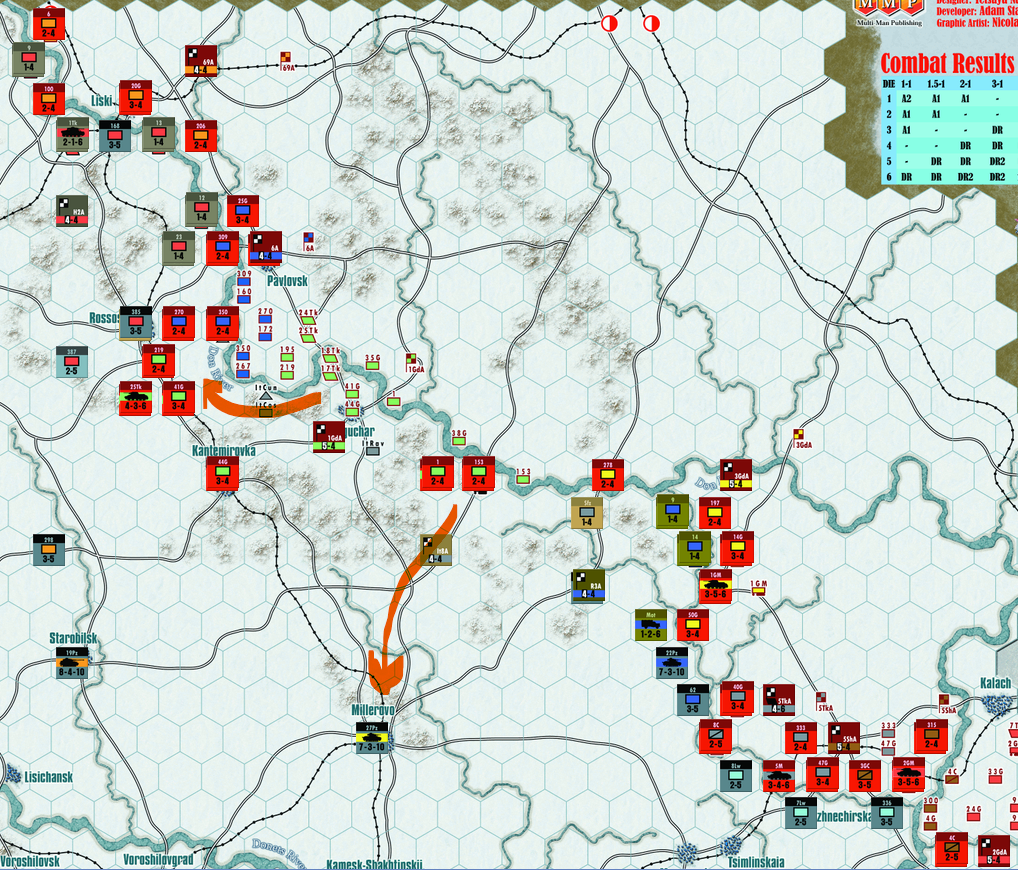
Greetings fellow grognards, just a quick post to plug Gaelcon 2021. Along with other Irish gamer's I shall be teaching a war game via vassal and discord to interested Gaelcon attendees on Sunday 24th October from 3pm. The game I have offered to teach is "A Victory Lost".
From Board Game Geek- "A Victory Lost: Crisis in Ukraine, is a simulation of the intense mobile fighting between the Axis and Soviet forces in the southwestern USSR, from the completion of the Soviet encirclement in December 1942 to German Field Marshall von Manstein's famous "Backhand Blow" counterattack. The Soviet forces aims to trap and eliminate the Axis forces that are in full retreat from the Caucasus, while the Axis forces must successfully withdraw and attempt to restore the front line by launching a desperate counterattack. The slightest mistake might turn victory into a rout."
Details of the wargame event are below. Go on, release your inner wargamer, you know you want to.
Historical Board Wargames
Advanced Squad Leader, Commands and Colors, you have heard the names but can you play the games?
These sessions are devised for novices and experts to learn the tools for online play, to meet other players and to learn new game systems with experienced game facilitators. Come to the glorious board wargames discord channel for tutorials, pickup games and matchmaking.
Tutorial: How to Play Online Board Wargames with Vassal
Sat + Sun Lunchtime (1-2pm)
In these sessions, we will take you through installing and using the free Vassal online tabletop for wargames (https://vassalengine.org/) with a focus on how to use popular modules like Advanced Squad Leader, Combat Commander, Commands and Colors, Standard Combat Series and World at War 85.
Suitable for new players or experienced players who want to learn about online play.
Note; Vassal is a java program that runs on Windows or Mac but it does not support tablet, Chromebook or phone play so you will need a PC to participate.
Board Wargames Sessions on Saturday and Sunday afternoon, 2-4pm
Join this session for wargames tutorials and matchmaking for online play. For this session, we have assembled a team of experienced players to introduce you (or you and an opponent) to some of the most popular wargames systems, for example, ASL, Combat Commander, A Victory Lost, The Russian Campaign, Men of Iron, Commands and Colors, the Standard Combat Series and World at War 85.
We will also provide a matchmaking service for experienced players who wish to play one of these games so please turn up at this time to start to play. Players who have licenses for Tabletop Simulator and prefer that can of course also use that to play wargames in this session.